
What if NYC was a Childhood City?
Helping kids have freedom and independence through the built environment
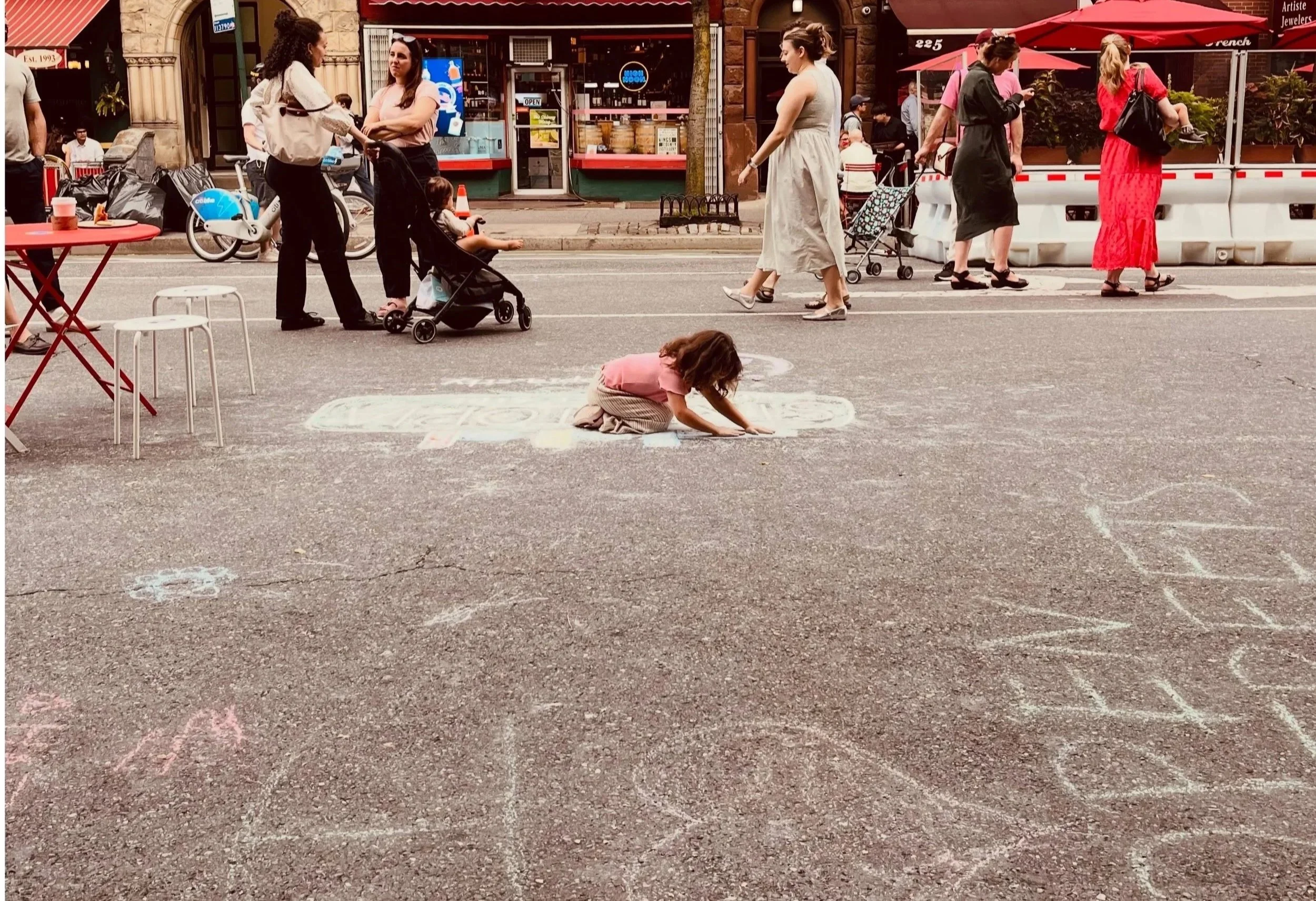
There’s no denying children’s public lives have shrunk over the decades. The reasons are many and varied, but our streets and public spaces needn’t be one of them.
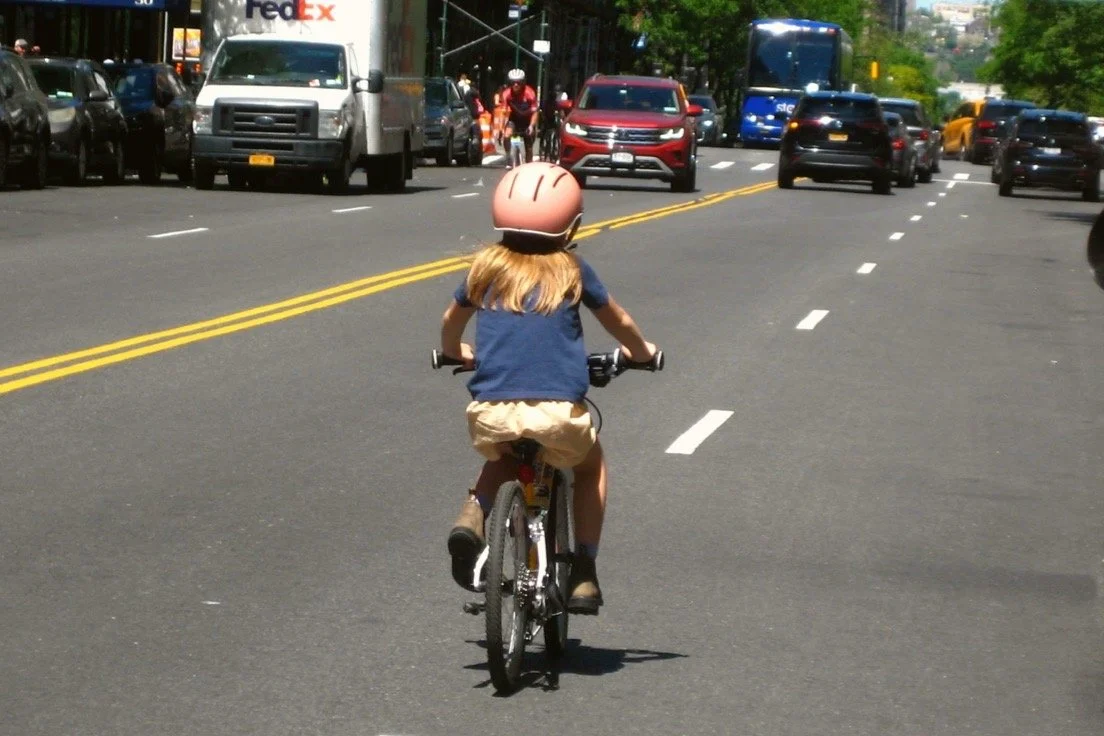
Photo credit: Julian Mahaney
We might not be able to easily solve every issue related to the increasingly shrinking range of childhood, but we can immediately change the way we build for it.
Too much of the public realm ignores the needs of children and their caregivers, placing burdens on their time and restricting where they can go.
For children, this contributes to an ever-dwindling radius of independence out of a legitimate fear for their physical safety as they navigate the city.
The choices of decision-makers on behalf of children and caregivers too often ignore the implications and impacts of those decisions, however well-intentioned. What if we changed that?
What if every decision made about the public realm had to address how our streets and public spaces impacted the experience of childhood? Would we be more deliberate? Would we make decisions with more care?
We think so, and we’re here to help make that happen.
Children have a legitimate claim on the city, how it functions, and who it serves. If we build cities with the needs of childhood in mind, those cities work better for everyone.
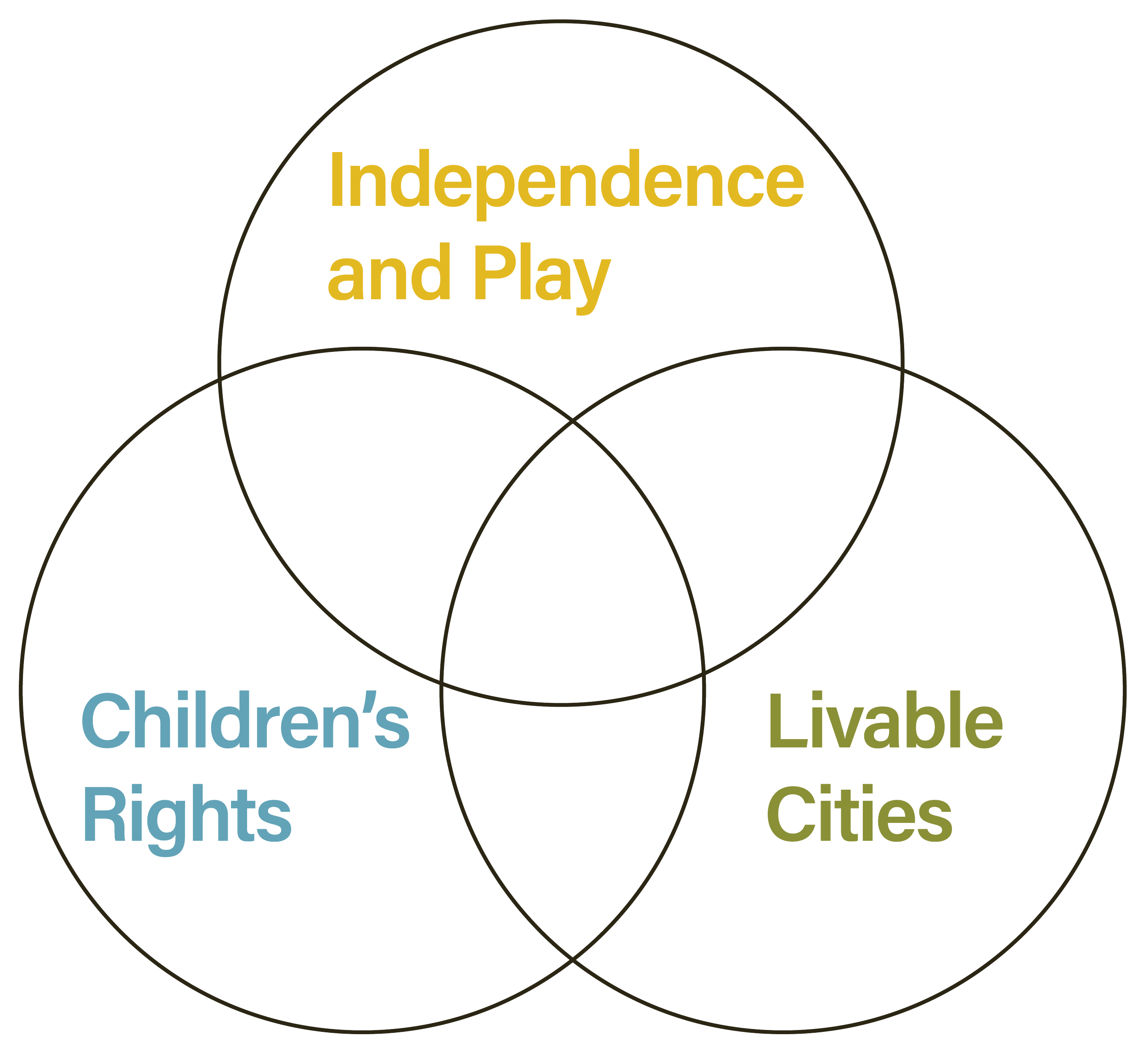
We’re part of a global movement. Several, in fact.
Experts on play, child psychology, education, and governance are increasingly sounding the alarm that society has lost the plot when it comes to the needs and wellbeing of children.
The good news is, people across a range of disciplines are working every day to recenter the experience of children in the way we structure society and make collective decisions about the present and future.
From the United Nations Convention on the Rights of the Child to our growing understanding of the critical importance of play in healthy human development, more and more attention is being paid to the needs of kids during a crucial time in their lives.
Add to this a global reckoning with decades of destructive planning decisions that have shaped cities around the car at the expense of people, and it’s clear the time has come for a radical change.
We think cities built for childhood hold the answer.
New York City should be the best place in America to experience childhood. In many ways, it already is. But there’s still quite a lot of work to do.
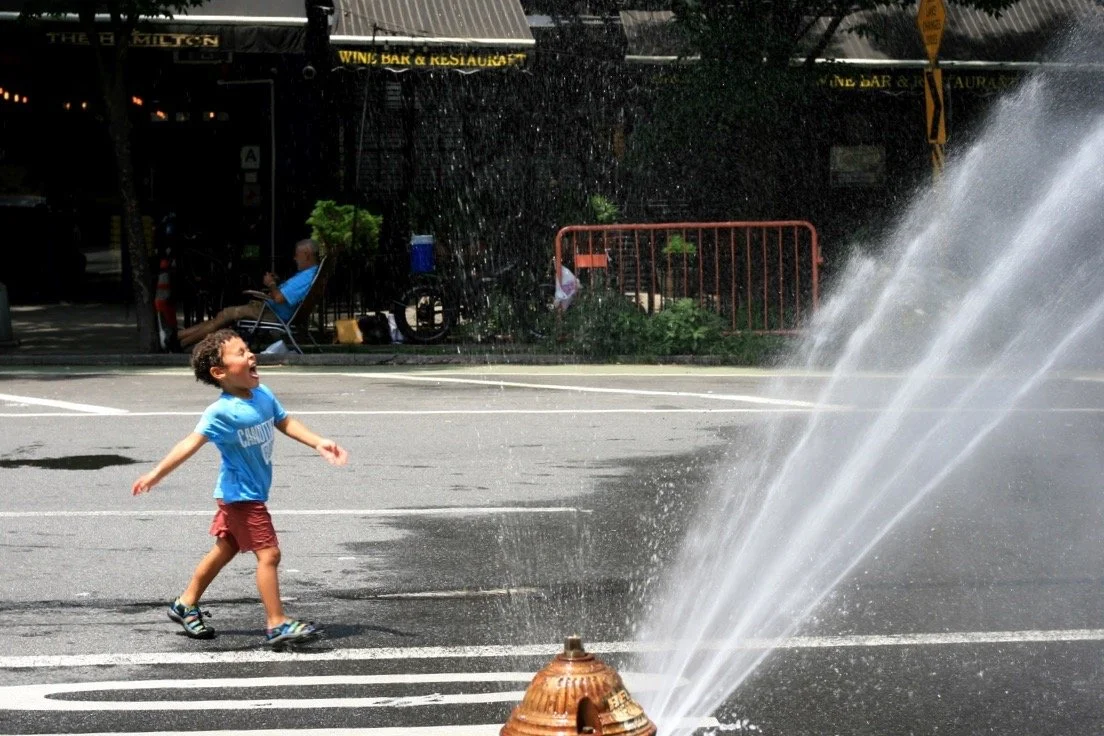
Photo credit: Carl Mahaney
To grow up in New York is to come of age in a dense and dynamic global city full of wild and wonderful diversity. New York’s relative walkability and robust (if flawed) transit network puts the world at kids’ fingertips.
But look at just about any street, and you’ll see a row of parked cars where opportunity for play should be. Look at any neighborhood, and you’ll see the systemic harms and obstacles of a city organized around the automobile.
We aim to change this by better understanding how children move around their neighborhoods and the city, by engaging children and caregivers in the design of the public realm, and by advocating on their behalf to influence policy and planning decisions.
Simply put: we want to make sure the unique needs of childhood are considered, and prioritized, in every decision about the public realm.
Get in touch. We’d love to connect and collaborate. info@childhood.city
It takes a village to make a childhood city. Our role is to help uncover insights, make connections, and uplift the adults, caregivers, and children already doing the work.
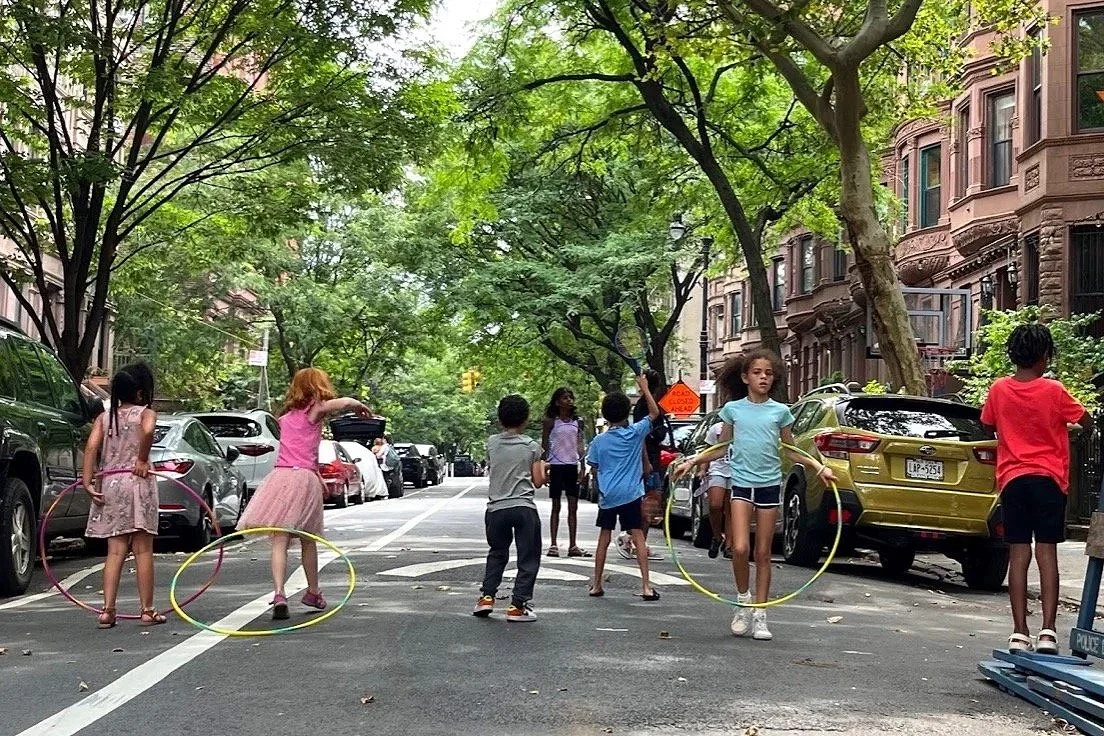
Photo credit: Carl Mahaney
To say Carl Mahaney founded Childhood City to make it easier for his son to ride his bicycle to school would be an exaggeration. (But not by much.)
Commuting to school and getting around the city are the kinds of basic lived realities felt by children and caregivers every day. They shape how we experience our neighborhoods, affect what opportunities are available to us and who we are able to socialize with, and reveal the ways childhood is too often neglected in decisions about the built environment.
Changing this mindset — making the consideration of childhood an obligation, not an option — is at the heart of Childhood City.
Carl draws on more than twenty-five years as a practicing architect, eleven years as a practicing parent, and five years as a livable streets leader working with communities to improve the experience of public space in New York City.
See some of Carl’s writing and advocacy.